1. Understanding NAAC Criteria 7 Requirements
Under the National Assessment and Accreditation Council (NAAC) assessment framework, Criterion VII: Institutional Values and Best Practices holds significant weight in determining an educational institution's final cumulative grade point average (CGPA):
Metric 7.1.2: Alternate sources of energy and energy conservation measures (Solar, Biogas, Wheeling to the grid, Sensor-based energy conservation, Use of LED bulbs).
Metric 7.1.3: Facilities for the management of the various types of degradable and non-degradable waste.
Metric 7.1.4: Water conservation facilities available in the institution (Rainwater harvesting, borewell recharge, waste water recycling, maintenance of water bodies).
Metric 7.1.6: Quality audits on environment and energy regularly undertaken by the institution (Green audit, Energy audit, Environment audit, Clean and green campus recognitions/awards).---
2. The Three Core Audits: Energy, Green & Environment
NAAC mandates that quality audits must be conducted by external accredited certification bodies:
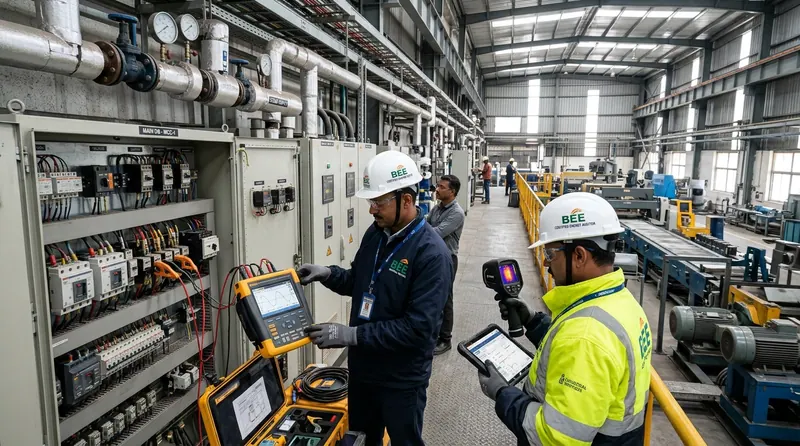
1. Energy Audit
Detailed electrical consumption analysis across classrooms, science laboratories, computer centers, and hostels.
Identification of high-consumption lighting fixtures, older ceiling fans, and legacy air conditioning systems.
Solar photovoltaic (Rooftop PV) feasibility and grid-tied net-metering potential.2. Green Audit
Flora and fauna biodiversity indexing of the campus acreage.
Green cover ratio (canopy cover relative to built-up area).
Pedestrian-friendly pathways, bicycle provisions, and restricted automobile zones.3. Environmental Audit
Ambient air quality monitoring (PM2.5, PM10, SOx, NOx).
Noise level surveys in silent zones (libraries, exam halls, residential hostels).
E-waste disposal compliance and hazardous chemical management in chemistry/biology laboratories.---
3. Water Audit & Waste Management Verification
Per Capita Water Consumption: Benchmarking daily water utilization per student/staff against standard NBC guidelines (typically 45–135 liters/head/day).
Rainwater Harvesting Catchment Modeling: Calculating rooftop surface areas, runoff coefficients, and underground rainwater recharge tank capacities.
Sewage Treatment Plants (STP): Verifying treated water quality for campus garden irrigation and toilet flushing.
Solid Waste Management: Auditing organic waste composting, biogas generation from college canteen food waste, and tie-ups with certified recyclers.---
Our accredited audit reports calculate the institution's net greenhouse gas emissions expressed in Metric Tonnes of $CO_2$ Equivalent ($tCO_2e$):
Scope 1 (Direct): Fuel consumed by college bus fleets, diesel generators, and LPG used in hostels and canteens.
Scope 2 (Indirect): Grid electricity purchased from state utilities.
Carbon Sequestration: Offsetting calculations based on mature trees present on the campus grounds.---
5. Documentation Required for Peer Team Review
To satisfy NAAC Peer Team verification without audit queries:
[ ] Official audit certificates issued by an accredited engineering firm (bearing valid BEE and Government empanelment credentials).
[ ] Geotagged photographs of solar panels, rainwater harvesting pits, biogas plants, and sensor-based lighting.
[ ] Institutional policies on environment, energy usage, and plastic ban officially approved by the Governing Council.
[ ] Action Taken Reports (ATR) demonstrating implementation of previous audit recommendations.Athul Energy has guided hundreds of premier colleges, engineering universities, and medical institutions across India to secure stellar NAAC Criteria 7 ratings.